Your practical guide to the best state parks in Southwest Michigan for beaches, hiking, camping, dunes, trails, and year-round outdoor adventures.
State Parks in Southwest Michigan: The Complete Visitor Guide
Southwest Michigan’s state parks are some of the easiest places to experience the region’s incredible variety of landscapes in a single trip. One day can include climbing a towering sand dune, hiking through a quiet hardwood forest, paddling an inland lake, or cycling miles of converted rail trail. The appeal isn’t simply that these parks are beautiful—it’s that they’re easy to incorporate into almost any itinerary, especially if you know ahead of time that Michigan state parks require a Recreation Passport for vehicle entry and that conditions along Lake Michigan can change quickly depending on the weather.
This guide covers the Michigan state parks, state recreation areas, and state trail park that most travelers include when exploring Southwest Michigan. You’ll find detailed information on Warren Dunes State Park, Van Buren State Park, Saugatuck Dunes State Park, Fort Custer Recreation Area, Yankee Springs Recreation Area, and Kal-Haven Trail State Park. Together, they represent the region’s wide range of outdoor experiences, from expansive beaches and towering dunes to inland lakes, wooded trails, campgrounds, and some of the area’s best opportunities for hiking, biking, paddling, fishing, and wildlife watching.
One question comes up again and again when friends ask me where they should spend a day outdoors: “Which park should we visit?” The answer depends far more on your travel style than on which park is the most famous. If you’re looking for a classic beach day with easy swimming and dramatic dune climbs, Warren Dunes is hard to beat. If you don’t mind walking a little farther for a quieter shoreline, Saugatuck Dunes offers a very different experience. Travelers who would rather spend the day mountain biking, casting a fishing line, paddling an inland lake, or camping beneath a canopy of mature trees will likely find Fort Custer or Yankee Springs a better fit.
Rather than ranking one park above another, this guide is designed to help you compare them side by side so you can make the right choice for your trip. You’ll find quick-reference comparison tables, maps, practical planning advice, seasonal recommendations, and park-by-park overviews that explain what each destination does best. Along the way, you’ll also find opportunities to continue planning with guides such as Things to Do in Southwest Michigan, Southwest Michigan Beaches, Where to Stay in Southwest Michigan, and destination guides for New Buffalo, St. Joseph, South Haven, Saugatuck, and other communities throughout the region.
Southwest Michigan State Parks at a Glance
If you’re still deciding where to spend the day, start here. The “best” state park depends on what you want to do once you arrive. Warren Dunes is a stronger fit for a classic beach-and-dunes day. Saugatuck Dunes works better if you want a longer walk before reaching the shoreline. Fort Custer and Yankee Springs are better choices for inland lakes, wooded trails, fishing, mountain biking, or camping away from the busiest beach corridors.
The table below gives you a quick way to compare the major state parks, recreation areas, and state trail park in Southwest Michigan.
| Park | Location | Best For | Beach | Camping | Hiking | Swimming | Pets Allowed | Recreation Passport Required | Best Season |
| Warren Dunes State Park | Sawyer | Sand dunes, family beach days, camping | Yes | Yes | Excellent | Yes | Yes, in designated areas | Yes | Late spring through fall |
| Van Buren State Park | South Haven | Beach access, quieter camping, short hikes | Yes | Yes | Good | Yes | Yes, in designated areas | Yes | Summer and early fall |
| Saugatuck Dunes State Park | Saugatuck | Scenic hiking, quieter shoreline, wildlife | Yes | No | Excellent | Yes | Yes, in designated areas | Yes | Spring through fall |
| Fort Custer Recreation Area | Augusta | Hiking, mountain biking, fishing, inland lakes | No | Yes | Excellent | Yes, in inland lakes | Yes | Yes | Year-round |
| Yankee Springs Recreation Area | Middleville | Camping, boating, fishing, horseback riding | No | Yes | Excellent | Yes, in inland lakes | Yes | Yes | Spring through fall |
| Kal-Haven Trail State Park | South Haven to Kalamazoo | Cycling, walking, running, snowmobiling | No | No | Excellent trail use | No | Yes, leashed | Yes | Spring, summer, and fall |
Pets are generally welcome in Michigan state parks, but they are not allowed on designated swim beaches. Check posted signs when you arrive, especially at Lake Michigan parks where pet-friendly shoreline areas and main swimming areas may be separate.
Use this table as a first filter, not the final answer. If your trip is built around swimming, start with Warren Dunes, Van Buren, or Saugatuck Dunes. If you care more about trails, biking, fishing, or a quieter inland setting, look closely at Fort Custer, Yankee Springs, or the Kal-Haven Trail.
Map of Southwest Michigan State Parks
Lake Michigan State Parks
Southwest Michigan’s shoreline state parks share a few things in common—public access to Lake Michigan, opportunities for swimming and hiking, and landscapes shaped by centuries of shifting sand. Beyond that, each park offers a noticeably different experience. One is known for its towering dunes and expansive campground, another for its easy access to South Haven, while a third rewards visitors willing to hike a little farther for a quieter stretch of shoreline. Choosing the right park is less about finding the “best” one and more about matching it to the kind of day you want to have.
Warren Dunes State Park (Sawyer)
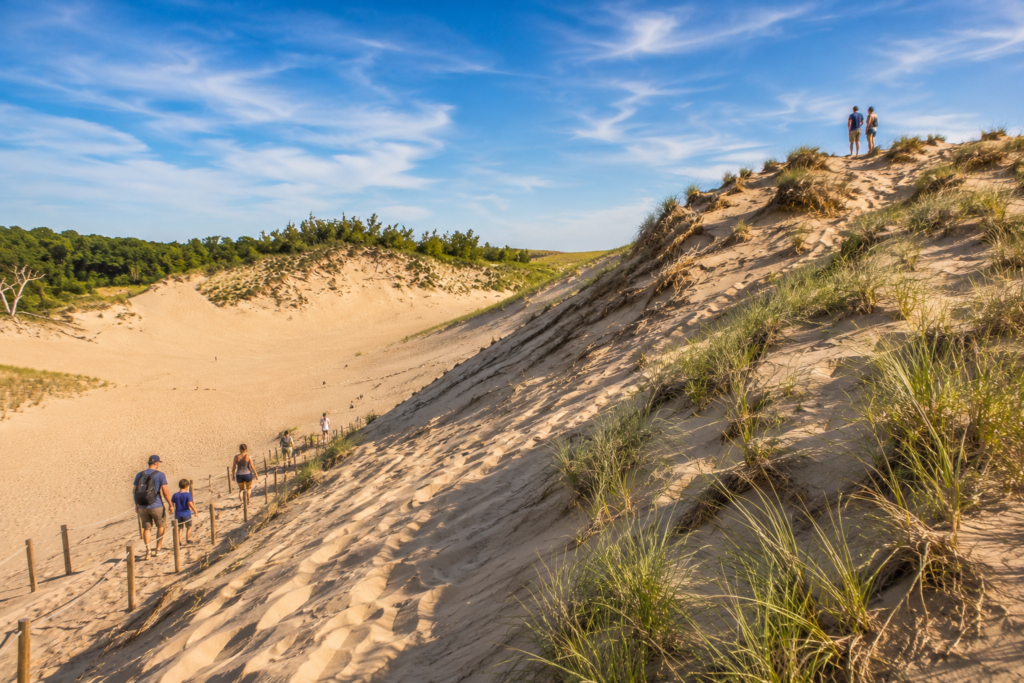
If a friend asked me where to start with Southwest Michigan’s state parks, Warren Dunes would probably be my first recommendation. It combines many of the experiences people hope for on their first visit: impressive sand dunes, a large swimming beach, scenic hiking trails, and one of the region’s most popular campgrounds. Its location just off I-94 also makes it an easy stop for visitors arriving from Chicago, northern Indiana, or southern Michigan.
The dunes are the park’s signature feature, but they also set expectations. Climbing them is more strenuous than many first-time visitors anticipate, especially on warm summer afternoons when the sand heats up quickly. Comfortable footwear, water, and a little extra time make the experience much more enjoyable. If you’re traveling with young children or anyone with limited mobility, you may want to balance a dune climb with time on the flatter beach areas rather than trying to do everything at once.
Swimming is another major reason people visit, but conditions deserve your attention. Lake Michigan can look calm from the parking area while stronger waves or currents develop along the shoreline. Before heading into the water, take a moment to check the beach warning flags and any advisories posted by park staff.
Warren Dunes works particularly well as part of a full day exploring the southern end of Southwest Michigan. After leaving the park, many visitors continue into New Buffalo for dinner or spend time exploring the wineries, breweries, and local businesses around Sawyer. If you’re deciding whether to camp or book other accommodations nearby, our Camping in Southwest Michigan guide compares the area’s campgrounds, while the Southwest Michigan Beaches guide can help you see how Warren Dunes compares with other shoreline destinations.
Van Buren State Park (South Haven)
Van Buren State Park appeals to travelers who enjoy having options. You can spend a few hours outdoors, return to your campsite for lunch, and still have plenty of time to explore South Haven before the day is over. That balance makes it a favorite for weekend trips where the park is part of the experience rather than the entire itinerary.
Unlike Warren Dunes, the emphasis here is less on dramatic elevation changes and more on easy access to a wide stretch of shoreline backed by wooded dunes. Short trails weave through the trees, offering a quieter walk before opening onto the beach. The campground sits close enough to make returning for supplies or a midday break simple, something families often appreciate during longer summer days.
Because the park is only a short drive from downtown South Haven, it’s easy to combine outdoor recreation with restaurants, shopping, or a stroll through the marina district without spending much time in the car. If you’re planning more than a single afternoon here, our South Haven Travel Guide highlights nearby attractions and seasonal events. Travelers comparing beaches throughout the region may also find the Southwest Michigan Beaches guide useful, while anyone already thinking about dinner will find plenty of local recommendations in Restaurants in South Haven.
Saugatuck Dunes State Park (Saugatuck)
Saugatuck Dunes State Park offers a different pace from the other shoreline parks. Reaching the beach requires a walk through rolling wooded dunes, so visitors tend to arrive with a backpack instead of a wagon full of beach gear. That short hike naturally spreads people out and creates a quieter experience once you reach the shoreline.
The trail system is the highlight here. Several routes lead through forests, open dune areas, and overlooks before descending toward the water. Along the way it’s common to spot birds, deer, and other wildlife, especially during the quieter hours of the morning. Photographers often prefer this park because the trails themselves provide interesting compositions long before the shoreline comes into view.
A little planning goes a long way. Bring only what you’re comfortable carrying, wear shoes suited to sandy trails, and allow enough time for the walk back to the parking area. Visitors expecting to park beside the beach are usually happier choosing Warren Dunes or Van Buren instead.
Many travelers finish their visit by exploring nearby Saugatuck or Douglas, where art galleries, cafés, and waterfront restaurants provide a pleasant contrast to a morning on the trails. If you’re still deciding which public shoreline best matches your trip, our Southwest Michigan Beaches guide offers an easy side-by-side comparison of beaches throughout the region.
Inland State Recreation Areas
If your ideal day outdoors revolves around trails, quiet lakes, paddling, or camping instead of spending hours on the shoreline, Southwest Michigan’s inland recreation areas deserve a place on your itinerary. These parks offer a different side of the region—one defined by hardwood forests, freshwater lakes, winding trails, and enough space to spread out, even during the busiest travel seasons. They also provide some of the best opportunities for year-round recreation, making them just as appealing in October or February as they are in July.
Fort Custer Recreation Area
If hiking, mountain biking, and spending a full day outdoors are your priorities, Fort Custer Recreation Area is one of the best choices in Southwest Michigan. Covering thousands of acres between Battle Creek and Kalamazoo, it combines inland lakes, hardwood forests, wetlands, and one of the region’s most extensive trail systems. It’s the kind of park that rewards repeat visits because every trail, lake, and season offers a slightly different experience.
Hikers have plenty of options here. Some trails meander through mature forests with only gentle elevation changes, while others are long enough to satisfy visitors looking for a half-day adventure. Instead of feeling like a single loop with little variation, the trail network encourages exploration. If hiking is one of the main reasons for your trip, you’ll find detailed route suggestions in our Best Hiking Trails in Southwest Michigan guide.
The park’s inland lakes make it easy to combine several activities without moving the car. Designated swimming areas, fishing access, and calm water suitable for kayaks and canoes allow visitors to build an entire day around the outdoors. Anglers regularly come here in search of bass, bluegill, and other freshwater species, while paddlers appreciate the quieter setting compared with larger recreational lakes. If fishing is high on your list, our Fishing in Southwest Michigan guide compares Fort Custer with other productive lakes throughout the region.
Mountain bikers often consider Fort Custer one of Southwest Michigan’s premier riding destinations. The trail system includes routes for beginners as well as more technical sections featuring tighter turns, rolling terrain, and natural obstacles that keep experienced riders engaged. Separate equestrian trails allow horseback riders to enjoy the park without competing for space on hiking and biking routes.
Camping is another reason many visitors choose Fort Custer. Modern campgrounds provide a comfortable base for exploring the recreation area over several days, and because so many activities are available within the park, there’s little need to spend time driving between destinations. If you’re comparing overnight options across the region, our Camping in Southwest Michigan guide offers a helpful overview of public campgrounds and what each one does best.
Fort Custer remains active long after summer ends. Autumn brings colorful forests and quieter trails, while winter attracts cross-country skiers, snowshoers, and hikers looking for peaceful landscapes. Many of the park’s primary facilities, parking areas, and modern campground amenities are designed with accessibility in mind, though individual trails vary in surface and difficulty. Checking current trail conditions before your visit is always worthwhile, especially after heavy rain or winter weather.
Yankee Springs Recreation Area
Yankee Springs Recreation Area is the park I recommend to travelers who want to spend as much time on the water as they do on the trails. Located in the Gun Lake region, it centers on a collection of inland lakes surrounded by forests and gently rolling terrain, creating an outdoor destination where boating, paddling, fishing, hiking, and camping all fit naturally into the same trip.
The hiking experience here feels quieter than at many of the region’s shoreline parks. Trails weave through wooded landscapes, circle lakes, and pass wetlands that attract a variety of birds and wildlife. Instead of hiking toward dramatic overlooks, the reward is the sense of space and calm that develops as you move farther from the trailhead. Early mornings are especially rewarding if you enjoy birdwatching or simply prefer a slower pace before the day becomes busier.
The lakes are the heart of the recreation area. Kayaks, canoes, paddleboards, and small motorboats all have room to explore, while anglers appreciate having several fishing opportunities within one park. If you’re trying to decide which inland lake best matches your interests, our Best Lakes in Southwest Michigan guide compares Yankee Springs with other popular destinations throughout the region.
Camping is well suited to visitors planning a long weekend. Having lakes, trails, and boat launches close together means you can leave your campsite in the morning and spend the entire day outdoors without constantly relocating. Horseback riders will also find designated equestrian trails that provide another way to experience the recreation area while helping reduce conflicts with hikers and cyclists.
Yankee Springs is worth considering outside the summer season as well. Fall transforms the surrounding hardwood forests into one of the region’s better spots for color touring, while winter brings opportunities for snowshoeing, cross-country skiing, and quiet walks through snow-covered woods. Accessibility varies depending on the campground, boat launch, or trail you plan to use, so visitors with specific mobility needs should review the latest Michigan Department of Natural Resources accessibility information before arriving.
State Trail Parks
Most state parks are places you drive into, spend a few hours exploring, and then head home. State trail parks work differently. They connect communities rather than centering on a single destination, allowing you to choose how far you want to travel and where your day begins or ends. In Southwest Michigan, the Kal-Haven Trail is the region’s signature example, offering a completely different outdoor experience from the beaches, forests, and recreation areas covered earlier in this guide.
Kal-Haven Trail State Park
Kal-Haven Trail State Park follows a former railroad corridor for approximately 34 miles between South Haven and Kalamazoo. The trail’s gentle grades, wide path, and numerous access points make it approachable for visitors of many ages and experience levels. You don’t need to tackle the entire route to enjoy it. In fact, most people choose a section that fits the amount of time they have rather than attempting all 34 miles in one outing.
Cycling is easily the trail’s biggest draw. The crushed limestone surface provides a comfortable ride for hybrid bikes, gravel bikes, and many mountain bikes, while the gradual elevation changes let you enjoy the scenery without constant climbing. Riders using road bikes with narrow tires should expect a slower pace than they would on pavement, especially after wet weather. If you’re looking for additional places to ride, our Best Biking Trails in Southwest Michigan guide compares several other routes throughout the region.
The same qualities that attract cyclists also make the trail popular with walkers and runners. Long stretches pass beneath mature tree canopies, through open farmland, and across bridges that break up the scenery without requiring strenuous climbs. Thanks to the many trailheads along the route, it’s easy to plan a relaxed one- or two-hour outing instead of committing to an all-day adventure.
One of the things I appreciate most about the Kal-Haven Trail is that the journey becomes the destination. Instead of racing toward a scenic overlook or beach, you begin to notice the small details along the way—the changing forests, quiet country roads, restored railroad bridges, and the rhythm of the landscape as it shifts between woods and farmland. Benches and occasional rest areas provide convenient places to pause, enjoy a snack, or simply take in the surroundings before continuing.
The communities at either end of the trail make it easy to turn a ride into a full day trip. Starting in South Haven lets you finish with lunch, shopping, or time exploring the waterfront, while beginning near Kalamazoo offers convenient access to restaurants, breweries, and other city attractions before or after your ride. If you’re planning to spend additional time on the lakeshore, our South Haven Travel Guide highlights nearby attractions that pair naturally with a morning or afternoon on the trail.
Although the Kal-Haven Trail sees its highest use from late spring through fall, each season offers a different experience. Summer is ideal for longer bike rides beneath the shade of mature trees, while autumn draws visitors looking to enjoy colorful hardwood forests without the crowds found at some other destinations. Early spring riders should know that the crushed limestone surface can remain soft after snowmelt or extended periods of rain, making travel a little slower until conditions dry out.
Winter transforms the trail once again. When snowfall is sufficient, portions of the Kal-Haven become part of Michigan’s snowmobile trail network, creating an entirely different way to experience the corridor. If you plan to snowmobile, remember that a valid Michigan Snowmobile Trail Permit is required, and trail conditions depend on adequate snow coverage. Checking the latest trail status before leaving home is always worthwhile.
If this is your first visit, resist the temptation to measure the day by mileage alone. A relaxed five- or ten-mile ride often leaves more time to enjoy the scenery, stop in one of the trail communities, and appreciate what makes the Kal-Haven Trail different from Southwest Michigan’s other state parks. It is less about reaching the finish line and more about enjoying the journey along the way.
Which Southwest Michigan State Park Should You Visit?
After comparing the parks, the next question is usually the easiest to ask and the hardest to answer: Which one should I actually visit? The good news is that there isn’t a wrong choice. Each park excels at something different, so the best option depends on how you want to spend your time rather than which park receives the most attention.
Use this quick guide to match your interests with the park that’s likely to fit your trip best.
| If You’re Looking For… | Best Choice | Why It’s the Best Fit |
| Best for Families | Warren Dunes State Park | Combines a large beach, dune climbing, picnic areas, campground, and easy day-use facilities in one location. |
| Best Beach | Warren Dunes State Park | Offers one of the region’s largest public swimming beaches with plenty of room to spread out. |
| Best Sand Dunes | Warren Dunes State Park | The tallest, most accessible climbable dunes in Southwest Michigan. |
| Best Hiking | Fort Custer Recreation Area | The largest variety of trails, terrain, and route lengths in the region. |
| Best Camping | Fort Custer Recreation Area | Multiple outdoor activities begin directly from the campground, making it an excellent base for a weekend. |
| Best Mountain Biking | Fort Custer Recreation Area | Home to one of Southwest Michigan’s premier mountain bike trail systems. |
| Best Fishing | Yankee Springs Recreation Area | Several inland lakes provide anglers with a variety of fishing opportunities. |
| Best Birdwatching | Saugatuck Dunes State Park | A mix of woodland, dune, and shoreline habitats attracts a wide variety of birds throughout the year. |
| Best Wildlife Viewing | Yankee Springs Recreation Area | Forests, wetlands, and lakes support deer, waterfowl, wild turkeys, and other wildlife. |
| Best Photography | Saugatuck Dunes State Park | Forest trails, dune landscapes, and shoreline scenery create diverse photographic opportunities. |
| Best Fall Colors | Yankee Springs Recreation Area | Hardwood forests surrounding the lakes provide some of the region’s best autumn scenery. |
| Best Winter Recreation | Fort Custer Recreation Area | Popular for winter hiking, cross-country skiing, and quiet outdoor escapes after snowfall. |
| Best Quiet Escape | Saugatuck Dunes State Park | The walk to the shoreline naturally keeps visitor numbers lower than at more easily accessible parks. |
If this is your first visit to Southwest Michigan and you only have time for one state park, Warren Dunes State Park is usually the easiest recommendation because it combines several classic Michigan experiences into a single stop. If you’re planning to return—or simply prefer hiking, biking, paddling, or camping over spending the day at the beach—Fort Custer Recreation Area or Yankee Springs Recreation Area may leave a stronger impression.
Keep in mind that many visitors enjoy more than one park during the same trip. For example, you might spend one day exploring Warren Dunes and another riding the Kal-Haven Trail or hiking at Fort Custer. If you’re still building your itinerary, our Things to Do in Southwest Michigan guide offers ideas for combining these parks with nearby attractions. Visitors looking for additional shoreline options can compare public access points in our Southwest Michigan Beaches guide, while those planning several days outdoors may find our Camping in Southwest Michigan and Best Hiking Trails in Southwest Michigan guides helpful when deciding where to spend their time.
Things to Do at Southwest Michigan State Parks
The best way to enjoy Southwest Michigan’s state parks is to plan around the activity first, then choose the park that fits it. A beach day has different needs than a trail ride. A camping weekend requires more advance planning than a quick afternoon hike. Use this section as a practical activity guide so you know what to expect before you pack the car.
Swimming
Swimming is most common at the Lake Michigan parks and selected inland lake areas, but it is never something I would treat casually. Check posted beach flags, water conditions, and park notices before anyone gets in the water. Lake Michigan can change quickly, and inland lakes have their own rules depending on the designated swim area. Families should choose parks with easier day-use access, nearby restrooms, and enough space to take breaks between swims.
Beach Days
A successful beach day usually comes down to timing and packing. Arrive early during summer weekends, especially at Warren Dunes, because parking and the best beach spots can fill quickly. Bring shade, water, snacks, sandals for hot sand, and a realistic amount of gear. If you want a beach day with less hauling, choose a park where the parking area is closer to the shoreline. If you do not mind walking farther for a quieter setting, Saugatuck Dunes may be worth the extra effort. For more shoreline comparisons, use the Southwest Michigan Beaches guide.
Hiking
Hiking conditions vary widely across the parks. Sandy dune trails require more effort than their mileage suggests, while inland forest trails can feel easier underfoot but may be muddy after rain. Wear shoes with traction, bring water, and check trail maps before starting. Fort Custer is the better choice for varied trail mileage, while Saugatuck Dunes works well for visitors who want a hike that leads to the shoreline. If hiking is a main part of your trip, the Best Hiking Trails in Southwest Michigan guide can help you choose specific routes.
Camping
Camping is available at several state parks and recreation areas, but summer weekends often book early. Decide first whether you want a beach-adjacent camping experience or an inland base with more trail, lake, and activity variety. Van Buren and Warren Dunes work well for shoreline-focused trips, while Fort Custer and Yankee Springs are stronger choices for campers who want hiking, fishing, paddling, or biking close by. For a broader campground comparison, see Camping in Southwest Michigan.
Fishing
Fishing is strongest at the inland recreation areas, especially where multiple lakes give anglers more options in one visit. Bring the proper Michigan fishing license, check current regulations, and plan for early mornings or quieter evening hours if you want a calmer experience. Shore fishing, paddling access, and boat launches vary by park, so confirm details before building your day around one spot.
Kayaking & Canoeing
Kayaking and canoeing are better suited to the inland lakes than the open Lake Michigan shoreline, especially for casual paddlers. Wind matters more than many first-time visitors expect, so check the forecast before launching. Mornings often bring calmer water, while afternoons can be breezier. Fort Custer and Yankee Springs are the most logical parks to consider if paddling is a priority.
Mountain Biking
Fort Custer is the clear standout for mountain biking in this guide. Trail conditions matter, especially after rain, so avoid riding muddy trails that can damage the surface. Riders should bring a properly suited bike, helmet, water, and enough time to choose a route that matches their skill level. Beginners should start conservatively; experienced riders will find more challenging sections once they get familiar with the trail system.
Birdwatching
Birdwatching is best when you slow down and visit at the right time of day. Early mornings usually offer more activity and fewer people on the trails. Saugatuck Dunes is a strong choice because of its mix of wooded, dune, and shoreline habitats, while Yankee Springs and Fort Custer offer wetlands, forests, and inland lake edges. Bring binoculars, keep your distance, and avoid stepping off trail in sensitive areas.
Picnicking
Picnicking is easiest when you choose a park based on comfort, not just scenery. Look for nearby restrooms, shade, parking, and tables if you are traveling with children or older relatives. Warren Dunes and Van Buren work well for classic summer picnic days, while the inland parks are better if you want a quieter lunch between hikes, fishing, or paddling.
Photography
For photography, match the park to the type of images you want. Warren Dunes gives you dramatic sand and scale. Saugatuck Dunes offers trail variety and quieter natural scenes. Fort Custer and Yankee Springs are better for forests, lakes, wildlife, and autumn color. Protect camera gear from sand, avoid disturbing wildlife for a closer shot, and give yourself enough time to walk beyond the busiest areas.
Camping at Southwest Michigan State Parks
Camping is one of the best ways to slow down and experience Southwest Michigan. Instead of trying to squeeze several parks into a single afternoon, you can settle into one area, enjoy the trails and nearby lakes at your own pace, and spend evenings around the campsite rather than in the car. The key is choosing a campground that matches the kind of trip you’re planning, because not every state park offers the same experience.
Modern Campgrounds
Modern campgrounds are the right choice for most first-time visitors. These campgrounds typically provide electrical hookups, modern restrooms, showers, potable water, and easier access to park facilities. They’re especially convenient for families, campers traveling with children, or anyone who appreciates ending a long hike with a hot shower.
Warren Dunes, Van Buren, Fort Custer, and Yankee Springs all offer modern camping, but each has a different feel. Shoreline campgrounds naturally appeal to visitors planning beach-focused vacations, while inland campgrounds often provide quicker access to hiking, paddling, fishing, and biking throughout the day.
Rustic Camping
If your goal is a quieter camping experience with fewer conveniences, rustic camping may be a better fit. These sites generally offer more privacy and a stronger connection to the surrounding landscape, but they also require more preparation since amenities are limited.
Rustic camping works well for experienced campers who don’t mind carrying additional gear or giving up some comforts in exchange for a more peaceful setting. Before reserving a rustic site, take time to review what facilities are—and are not—available so there are no surprises after you arrive.
RV Camping
Southwest Michigan’s state parks are popular with RV travelers, particularly from late spring through early fall. Before making reservations, verify the maximum site length, electrical service, and any restrictions that apply to your particular rig. Not every campsite accommodates larger motorhomes or fifth-wheel trailers.
One tip I often share is to avoid assuming every site within a campground is equally suitable. Two campsites next to each other may differ significantly in length, shade, or ease of backing in. Looking at the campground map before booking usually pays off.
Tent Camping
Tent camping remains one of the most rewarding ways to experience the parks, especially if you enjoy hearing birds at sunrise or relaxing around a campfire after dark. A little preparation makes a noticeable difference. Pack a quality ground tarp, expect cooler overnight temperatures even during summer, and store food securely to discourage wildlife from visiting your campsite.
If you’re planning several nights outdoors, think about what you’ll do during the hottest part of the afternoon. Choosing a campground close to hiking trails, swimming areas, or paddling opportunities makes it easier to stay active without spending the day driving.
Reservations
Reservations become increasingly important as summer approaches. Holiday weekends and much of July and August often fill months in advance, particularly for campsites with electrical hookups or larger RV pads.
If your schedule allows, consider camping during the middle of the week or in September. You’ll often find greater availability, quieter campgrounds, and a more relaxed atmosphere while still enjoying excellent weather for hiking, biking, and exploring the surrounding communities.
Michigan Recreation Passport
If you’re camping in a Michigan state park, you’ll also need a Michigan Recreation Passport for vehicle entry. Michigan residents can purchase one when renewing their vehicle registration, while out-of-state visitors have options for purchasing entry passes before or during their visit. Having your Recreation Passport arranged before arriving at the park helps make check-in much smoother.
Camping Tips
The most enjoyable camping trips usually come down to good planning rather than expensive gear. Review your campground map before arriving, download directions if cell service may be inconsistent, and pack for changing weather, even during summer. A flashlight, extra drinking water, insect repellent, and a simple first-aid kit are items I rarely leave behind.
Finally, don’t feel pressured to fill every hour with activities. One of the advantages of staying inside a state park is that you don’t have to rush from attraction to attraction. Leave time for an evening walk, a quiet morning with coffee at your campsite, or simply listening to the sounds of the forest before starting another day of exploring. If you’re still deciding which campground best matches your trip, our Camping in Southwest Michigan guide compares campgrounds throughout the region and can help narrow your options before you book.
Hiking in Southwest Michigan State Parks
One of the things I appreciate most about hiking in Southwest Michigan is that every trail system offers a different experience. You can climb sandy dunes that leave your legs burning, spend a peaceful afternoon circling an inland lake, or enjoy a long, mostly level walk along a former railroad corridor. Instead of asking, “Which park has the best hiking?” I usually encourage friends to ask, “What kind of hike do I want today?” The answer almost always points them toward the right park.
Warren Dunes State Park
Difficulty: Strenuous
Warren Dunes offers some of the most physically demanding hiking in the region, not because the trails are exceptionally long, but because loose sand changes everything. Walking through deep sand requires considerably more effort than hiking on packed soil, and climbing the park’s tallest dunes can feel like a workout even on shorter routes.
If you’re visiting with younger children or casual hikers, consider pairing one of the shorter trails with time on the beach instead of trying to conquer every dune. Hikers looking for more of a challenge will appreciate the elevated views and the sense of accomplishment that comes with reaching the top.
Van Buren State Park
Difficulty: Easy to Moderate
Van Buren’s trail system is approachable for most visitors. The paths wind through wooded dune areas before reaching the shoreline, making them ideal for a relaxed walk rather than an all-day hiking adventure.
The trails are relatively short, which makes them easy to combine with camping or an afternoon exploring South Haven. Families often appreciate that they can enjoy a scenic walk without committing several hours to the trail.
Saugatuck Dunes State Park
Difficulty: Moderate
Saugatuck Dunes rewards hikers who don’t mind working a little harder to reach the shoreline. The trails travel through rolling wooded dunes before opening onto quieter stretches of Lake Michigan, creating a hiking experience that feels more secluded than many visitors expect.
The walk is longer than first-time visitors often anticipate, so comfortable footwear and water are worthwhile even during cooler months. If you enjoy hiking as much as the destination itself, this is one of Southwest Michigan’s most satisfying parks to explore.
Fort Custer Recreation Area
Difficulty: Easy to Challenging
Fort Custer has the region’s most versatile trail network. Instead of relying on one signature hike, it offers numerous interconnected routes that allow you to tailor your day to your available time and fitness level.
Some trails remain relatively flat and easy to follow, while others provide longer distances, rolling terrain, wetlands, forests, and inland lake scenery. Because of that variety, Fort Custer works equally well for first-time hikers and experienced outdoor enthusiasts. If hiking is the primary reason for your trip, our Best Hiking Trails in Southwest Michigan guide explores many of these routes in greater detail.
Yankee Springs Recreation Area
Difficulty: Easy to Moderate
Yankee Springs offers hiking that feels quieter and more relaxed than many visitors expect. Trails weave through hardwood forests, around inland lakes, and across gently rolling terrain without demanding steep climbs or difficult footing.
The park is an excellent choice for hikers who enjoy longer walks, wildlife, and peaceful surroundings more than dramatic viewpoints. Autumn is especially rewarding, when colorful hardwood forests transform many of the trails into excellent places for an afternoon hike.
Kal-Haven Trail State Park
Difficulty: Easy
The Kal-Haven Trail is unlike any other hiking destination in this guide. Rather than following loops through a park, it stretches between South Haven and Kalamazoo along a former railroad corridor, allowing you to decide how far you want to walk before turning around or arranging transportation to another trailhead.
Its crushed limestone surface is generally level and easy to follow, making it one of the region’s best choices for casual walkers, runners, families with older children, and anyone looking for a comfortable day outdoors without steep climbs.
Choosing the Right Trail
If you’re hiking with younger children or someone who prefers shorter, less demanding walks, Van Buren State Park and sections of the Kal-Haven Trail are excellent places to begin. Visitors looking for a more strenuous workout should head toward Warren Dunes or the longer trail systems at Fort Custer. Hikers hoping for quieter surroundings often find themselves returning to Saugatuck Dunes or Yankee Springs.
One final piece of advice I’d give a friend is to leave a little extra time in your schedule. Southwest Michigan’s trails encourage you to slow down, whether that’s stopping to watch birds, taking photographs, or simply enjoying a quiet stretch of forest. Those unplanned pauses often become the part of the hike you’ll remember most. During spring and early summer, it’s also worth doing a quick tick check after hiking through wooded areas or tall vegetation. It’s a simple habit that helps make an enjoyable day outdoors end just as comfortably as it began.
Wildlife and Nature to Look For
One of the easiest ways to make a visit to Southwest Michigan’s state parks more rewarding is to slow your pace. Wildlife rarely appears on a schedule, and some of my favorite sightings have happened while taking a break on a trail or sitting quietly beside an inland lake. You don’t need to be an experienced naturalist to appreciate the region’s plants and wildlife—just a little patience and a willingness to notice what’s happening around you.
Spring Wildflowers
Spring arrives gradually in Southwest Michigan, and the forests often begin changing long before the trees fully leaf out. Woodland wildflowers take advantage of this brief window of sunlight, carpeting sections of the forest floor with color before the canopy closes overhead.
Fort Custer Recreation Area and Yankee Springs Recreation Area are particularly enjoyable during this season because many of their wooded trails pass through mature forests where spring blooms are easy to appreciate. Visiting in the morning often provides softer light for photography and a quieter experience on the trails.
Migrating Birds
Southwest Michigan sits along an important migration corridor, making spring and fall especially rewarding for birdwatchers. Songbirds, waterfowl, shorebirds, and birds of prey all pass through the region during migration, often stopping to rest before continuing their journeys.
Saugatuck Dunes State Park offers a mix of wooded habitat and open shoreline that attracts a wide variety of species, while Fort Custer and Yankee Springs provide excellent opportunities to observe birds around forests, wetlands, and inland lakes. Bringing a lightweight pair of binoculars can completely change the experience, even if you’re only casually interested in birdwatching.
White-tailed Deer
White-tailed deer are among the wildlife visitors are most likely to encounter. They’re common throughout Southwest Michigan’s state parks, particularly around dawn and dusk when activity tends to increase.
Although seeing deer is exciting, it’s best to observe them from a respectful distance. Feeding wildlife or attempting to approach for photographs changes natural behavior and can create unnecessary stress for the animals. A camera with a zoom lens usually provides a much better experience than trying to move closer.
Bald Eagles
Bald eagle sightings have become increasingly common throughout Southwest Michigan thanks to ongoing conservation efforts. Large inland lakes, rivers, and wooded shorelines provide excellent habitat, especially around Fort Custer Recreation Area and Yankee Springs Recreation Area.
Your best chance of spotting one is to scan the tops of large trees near the water or watch for birds soaring overhead. Even if you don’t immediately recognize an eagle, taking a few moments to look skyward during your hike can lead to some memorable surprises.
Butterflies and Pollinators
Butterflies, native bees, dragonflies, and other pollinators become increasingly active as temperatures warm. Prairie openings, woodland edges, and sunny clearings often provide the best opportunities to observe them.
Rather than chasing butterflies from flower to flower, try standing quietly for a few minutes. You’ll often notice far more activity once everything settles back into its normal rhythm.
Lake Michigan Coastal Ecosystems
The shoreline parks protect more than scenic views—they also preserve fragile ecosystems shaped by wind, sand, water, and native vegetation. Beach grasses, shrubs, and other plants play an important role in stabilizing dunes and providing habitat for wildlife.
When exploring these areas, stay on marked trails and boardwalks whenever possible. Walking through protected vegetation may seem harmless in the moment, but repeated foot traffic can damage plants that help hold the dunes together for future generations.
Responsible Wildlife Viewing
The best wildlife encounters happen when animals are allowed to behave naturally. Keep a respectful distance, avoid feeding wildlife, and leave pets under control in designated areas. If you stop to photograph an animal, make sure you’re not blocking the trail or encouraging others to crowd around.
A small pair of binoculars, comfortable walking shoes, insect repellent, and a little patience are often the only tools you need. More often than not, the visitors who see the most wildlife aren’t the ones moving the fastest—they’re the ones who take the time to pause, listen, and let the park reveal itself at its own pace.
Best Time to Visit Southwest Michigan State Parks
One question I hear often is, “When is the best time to visit?” The honest answer is that every season offers something different. Rather than trying to find the perfect month, think about the experience you’re hoping to have. Are you planning to spend the day in the water? Hoping for colorful hiking trails? Looking for a quiet campground? Matching your visit to the season will usually have a bigger impact on your trip than choosing one park over another.
Spring
Spring is my favorite season for visitors who enjoy hiking and nature more than crowds. As temperatures warm, the forests come alive with woodland wildflowers before the tree canopy fully develops, making trails at Fort Custer Recreation Area and Yankee Springs Recreation Area especially enjoyable. It’s also one of the best times of year for bird migration, with many species stopping in Southwest Michigan during their seasonal journeys.
Spring hiking is generally comfortable thanks to cooler temperatures, although trails can remain muddy after heavy rain or snowmelt. Waterproof footwear is often a good idea, particularly during March and early April. If hiking is one of the main reasons for your trip, our Best Hiking Trails in Southwest Michigan guide can help you choose routes that match your experience level while highlighting the best places to see spring wildflowers and migrating birds.
Summer
Summer is the busiest season, and for good reason. Warm weather makes it easy to combine swimming, hiking, paddling, picnicking, and camping into a single day. Families often plan vacations around school breaks, while campers take advantage of the long daylight hours to spend more time outdoors.
The tradeoff is that popular parks become especially busy on weekends and holidays. Arriving early gives you the best chance of finding convenient parking, and campground reservations should be made well in advance if you plan to stay overnight. I also recommend scheduling hikes in the morning, when temperatures are cooler, then saving the afternoon for swimming, kayaking, or relaxing back at your campsite.
Fall
If I had to recommend one season for visitors who aren’t tied to a summer schedule, it would probably be fall. Comfortable temperatures make longer hikes more enjoyable, hardwood forests begin changing color, and many parks become noticeably quieter once schools are back in session.
Autumn is also one of the best seasons for photography. Softer light, colorful forests, and less crowded trails make it easier to slow down and appreciate the scenery without feeling rushed. Campgrounds remain active well into the season, but finding reservations is often easier than during the height of summer.
Winter
Winter reveals a quieter side of Southwest Michigan’s state parks that many travelers never experience. Snow-covered forests, frozen inland lakes, and nearly empty trails create an entirely different atmosphere from the busy summer months.
Fort Custer Recreation Area is a favorite for winter hiking and cross-country skiing, while portions of the Kal-Haven Trail welcome snowmobilers when conditions allow. Even if you’re not planning an extended outdoor adventure, a short winter walk can be surprisingly rewarding. Dress in layers, wear footwear with good traction, and check trail and weather conditions before heading out. If you’re driving after snowfall, allow extra travel time and keep a small winter emergency kit—including a blanket, flashlight, ice scraper, and phone charger—in your vehicle. The slower pace and peaceful surroundings often become the highlight of a winter visit.
Helpful Tips Before You Go
A little preparation goes a long way when visiting Southwest Michigan’s state parks. Most trips go smoothly, but knowing a few park policies and local conditions before you leave home can save time, reduce stress, and help you spend more of the day enjoying the outdoors instead of solving unexpected problems.
Michigan Recreation Passport
Most vehicles entering Michigan state parks and recreation areas need a Michigan Recreation Passport or the appropriate nonresident entry pass. Michigan residents can purchase a Recreation Passport when renewing their vehicle registration, while visitors from outside the state can buy the required pass at many park entrances or online before arriving.
If you’re planning to visit more than one state park during your trip, purchasing the appropriate pass ahead of time makes moving between parks much easier.
Parking
Parking availability changes dramatically throughout the year. During summer weekends and holiday periods, the busiest parks often fill their primary parking lots by late morning. Arriving before 10:00 a.m. usually provides the best selection of parking spaces while also allowing you to enjoy cooler temperatures for hiking.
Always park in designated spaces and avoid blocking roads, gates, or emergency access routes. Overflow parking is not available everywhere, and illegally parked vehicles may receive citations or be towed.
Beach Safety
Swimming areas are monitored using a beach flag system that reflects current water conditions. Before heading into the water, take a moment to check the posted flags and read any safety notices at the beach entrance.
Children should always remain under close supervision, and even confident swimmers should avoid venturing too far from shore when conditions become rough. Lifeguards are not present at every state park beach, so visitors are responsible for making safe decisions based on current conditions.
Lake Michigan Conditions
One of the biggest surprises for first-time visitors is how quickly Lake Michigan can change. Calm water in the morning can become rough by afternoon as wind direction and wave heights increase.
Dangerous currents are possible even on warm, sunny days, and they aren’t always obvious from the shoreline. Before swimming, check the latest weather forecast and beach conditions. If waves are larger than expected or warning flags have been posted, it’s usually better to enjoy the shoreline from dry land and save swimming for another day.
Pet Rules
Pets are welcome in Michigan state parks, but there are important exceptions. Dogs are generally allowed in campgrounds, picnic areas, and on most trails when kept on a leash, but they are not permitted on designated public swimming beaches. Many parks provide pet-friendly shoreline areas away from the main swimming sections.
Bringing water, waste bags, and a leash long enough for comfortable walks—but short enough to maintain control—helps make the visit more enjoyable for everyone.
Accessibility
Southwest Michigan’s state parks continue to improve accessibility, but facilities vary from park to park. Many modern campgrounds, visitor areas, picnic shelters, restrooms, and parking lots include accessible features, while some trails remain naturally uneven because of terrain, sand, or elevation changes.
If accessibility is an important part of your planning, review the Michigan Department of Natural Resources accessibility information for your chosen park before leaving home. A few minutes of research can make choosing the right destination much easier.
Leave No Trace
The best way to help preserve Southwest Michigan’s state parks is to leave them looking much the way you found them. Stay on marked trails, avoid walking through protected vegetation, dispose of trash properly, and leave plants, rocks, and wildlife where they belong.
Even small decisions—such as remaining on boardwalks through sensitive dune areas or packing out everything you bring in—help protect these parks for future visitors.
What to Pack
Packing doesn’t have to be complicated, but a few essentials can make the day considerably more comfortable. Comfortable walking shoes, drinking water, sunscreen, insect repellent, and a small first-aid kit are useful almost any time of year. A lightweight rain jacket is worth bringing because weather conditions can change quickly.
If you’re planning to hike, a printed trail map or downloaded offline map can be helpful in areas with limited cell service. Birdwatchers may appreciate binoculars, photographers should consider carrying a lens cloth to remove sand or moisture, and anyone spending the day outdoors will benefit from bringing more water than they think they’ll need.
The final piece of advice I’d give a friend is simple: don’t try to fit every park into one weekend. Southwest Michigan rewards travelers who slow down, spend time exploring one place well, and leave themselves a reason to come back. That’s usually when the best memories are made.
Frequently Asked Questions About Southwest Michigan State Parks
How many state parks are in Southwest Michigan?
This guide covers the six major Michigan state park properties that most travelers include when exploring Southwest Michigan: Warren Dunes State Park, Van Buren State Park, Saugatuck Dunes State Park, Fort Custer Recreation Area, Yankee Springs Recreation Area, and Kal-Haven Trail State Park. Together, they showcase the region’s wide variety of outdoor experiences, from towering dunes and shoreline trails to inland lakes, forests, and one of Michigan’s best rail trails.
Which Southwest Michigan state park has the best beach?
For most visitors, Warren Dunes State Park is the top choice. Its large swimming beach, impressive sand dunes, spacious day-use area, and modern amenities make it ideal for a full day outdoors. Van Buren State Park is an excellent alternative if you’re staying near South Haven, while Saugatuck Dunes State Park is better suited to visitors who don’t mind a longer walk in exchange for a quieter shoreline.
Where are the tallest sand dunes?
The tallest climbable sand dunes in Southwest Michigan are found at Warren Dunes State Park. Several dune climbs offer sweeping views and provide one of the region’s most memorable outdoor experiences. If climbing dunes is one of the main reasons for your trip, this is the park I recommend visiting first.
Which state parks offer camping?
Modern camping is available at Warren Dunes State Park, Van Buren State Park, Fort Custer Recreation Area, and Yankee Springs Recreation Area. Saugatuck Dunes State Park does not have a campground, and Kal-Haven Trail State Park is a linear trail park rather than a traditional camping destination. If you’re comparing campgrounds across the region, our Camping in Southwest Michigan guide provides a more detailed breakdown.
Can you swim at every state park?
No. Swimming is available at several parks, but the experience differs depending on where you go. Warren Dunes, Van Buren, and Saugatuck Dunes provide designated swimming areas along Lake Michigan. Fort Custer Recreation Area and Yankee Springs Recreation Area offer designated inland lake swimming beaches instead. Kal-Haven Trail State Park is a trail corridor and does not have swimming facilities.
Are dogs allowed in Michigan state parks?
Yes, dogs are generally welcome in Michigan state parks when kept on a leash. However, they are not permitted on designated public swimming beaches. Many parks provide pet-friendly shoreline or recreation areas away from the main swimming beaches, so it’s always worth checking posted signs after you arrive.
Do I need a Michigan Recreation Passport?
Yes. Vehicles entering Michigan state parks and recreation areas generally need a Michigan Recreation Passport or the appropriate nonresident entry pass. Michigan residents can purchase a Recreation Passport when renewing their vehicle registration, while visitors from outside Michigan can purchase the required entry pass before or upon arrival. If you plan to visit several parks during your trip, having your pass ready beforehand saves time at the entrance.
Which park is best for hiking?
It depends on the kind of hike you’re looking for. Fort Custer Recreation Area offers the region’s most varied trail network, making it the best overall choice for hikers. Warren Dunes provides the most physically challenging dune hikes, Saugatuck Dunes rewards visitors with quieter trails and longer walks, while Kal-Haven Trail State Park is ideal for an easy, mostly level walk or bike ride. Our Best Hiking Trails in Southwest Michigan guide compares these trail systems in greater detail.
Which park is best for families?
Warren Dunes State Park is my recommendation for most families. It combines swimming, dune climbing, picnic areas, camping, and modern facilities in one location, making it easy to spend an entire day without needing to leave the park. Van Buren State Park is another excellent option for families looking for a slightly quieter setting near South Haven.
Which parks stay open year-round?
Michigan state parks remain open throughout the year, although individual facilities, campgrounds, restrooms, and visitor services may operate on seasonal schedules. Fort Custer Recreation Area, Yankee Springs Recreation Area, and Kal-Haven Trail State Park are especially popular during winter for hiking, cross-country skiing, and snowmobiling when conditions permit. Even the shoreline parks remain beautiful during the colder months, though visitors should be prepared for changing weather and winter trail conditions.
More Outdoor Adventures in Southwest Michigan
A visit to one of Southwest Michigan’s state parks is often just the beginning of the trip. After a morning hike, you might spend the afternoon exploring a nearby downtown, enjoy dinner at a local restaurant, or watch the sunset from a lighthouse. The parks are some of the region’s biggest attractions, but they’re also excellent starting points for discovering everything else Southwest Michigan has to offer.
If you’re still planning your itinerary, our Things to Do in Southwest Michigan guide brings together many of the area’s top attractions, museums, wineries, seasonal events, and outdoor activities. Visitors hoping to spend more time along the shoreline can continue with our Southwest Michigan beaches guide, while those interested in the region’s maritime history will enjoy exploring the Lighthouses of Southwest Michigan.
Outdoor enthusiasts have plenty of opportunities to keep exploring beyond the state park system. Our Best Hiking Trails in Southwest Michigan guide highlights additional trails throughout the region, and Campgrounds in Southwest Michigan compares public and private camping options if you’re planning an overnight stay. When it’s time to unwind after a day outdoors, you’ll also find practical recommendations in our Where to Stay in Southwest Michigan and Restaurants in Southwest Michigan guides.
Many of the state parks pair naturally with nearby communities, making it easy to turn a day outdoors into a weekend getaway. Visitors exploring Warren Dunes State Park often continue into New Buffalo or Bridgman for shopping, dining, and local attractions. A visit to Van Buren State Park combines well with South Haven, while Saugatuck Dunes State Park is only minutes from both the Saugatuck and Douglas. If your travels bring you farther north or east, St. Joseph offers another excellent base for exploring the region’s parks, beaches, waterfront, and local attractions.
One of the reasons I continue returning to Southwest Michigan is that no two parks leave me with the same memories. Warren Dunes challenges you to climb towering sand dunes before cooling off in the lake. Fort Custer invites you to spend hours exploring forests and inland lakes. Yankee Springs encourages you to slow down and enjoy peaceful paddling or a quiet hike, while the Kal-Haven Trail reminds you that sometimes the journey itself becomes the destination.
I hope this guide helps you choose the state park that best matches your interests, whether you’re planning your first visit or returning to discover somewhere new. More importantly, I hope it encourages you to look beyond the park entrance. Some of Southwest Michigan’s best experiences are found when you combine its natural landscapes with its welcoming communities, local restaurants, scenic drives, and small-town discoveries. That’s when a good day outdoors becomes a memorable Southwest Michigan getaway.